Rethinking Psychological Anthropology Continuity and Change in the Study of Human Action
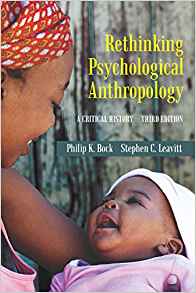
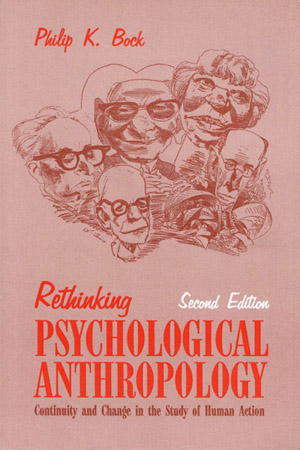
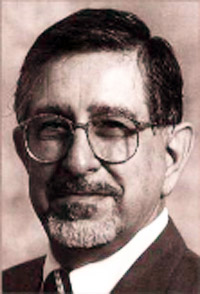
"In this introduction to an important field, Bock provides a critical account of the ways that anthropologists have used and misused psychological concepts in their studies of various societies. He argues that we must be aware of these past efforts and errors if we are to develop culturally sensitive ways of understanding the relationship of individuals to their societies. Starting with nineteenth-century studies of 'primitive mentality,' the book examines the school of culture and personality, including cross-cultural correlational studies, and continuing on to recent work on sociobiology, shamanism, self, and emotion. Relevant psychological concepts are explained as needed, and each approach is presented in its own terms before critical examination. Chapter supplements and a new chapter bring the book completely up to date." -- Waveland Press

Stephen C. Leavitt
Some excellent classic books in many fields are also often available online free. For example, the full text of Sigmund Freud's first major work, The Interpretation of Dreams (3rd Edition, 1911), Trans. by A.A. Brill, is available online at <http://www.psywww.com/books/interp/toc.htm>.
The course anchor text isRethinking Psychological Anthropology: Continuity and Change in the Study of Human Action, Third Edition
(2019)
is currently available on-line for $39.95 new, $29.95 e-textbook, and $tba used.
(+ p/h, where applicable, at amazon.com & eligible for FREE Super Saver Shipping on orders over $25).
[buy a used one]
(08 December 2018)
Rethinking Psychological Anthropology: Continuity and Change in the Study of Human Action, Second Edition (1999)
is currently available on-line for $33.56 new, and $5.49 used.
(+ p/h, where applicable, at amazon.com & eligible for FREE Super Saver Shipping on orders over $25).
[buy a used one]
(20 August 2018)
"After over three decades of continual publication in multiple editions, the Third Edition of Rethinking Psychological Anthropology, now with coauthor Stephen Leavitt, describes the latest interests, concepts, and approaches in the field with the inclusion of four new chapters and updates to earlier topics. The premise of the previous editions remains: that all anthropology is psychological and that the interplay between anthropological methods and the psychological theories existing in different times is dialectical."
"Psychological anthropologists have grappled with changing trends in both disciplines, including psychoanalytic, holistic, cognitive, interpretive, and developmental approaches. It is important to appreciate these currents of thought to understand the state of the field today. This text is thus a guide to that history along with a critique that may lead to a new synthesis. It is an ideal choice for courses in psychological anthropology, cross-cultural psychology, and the history of anthropology."
Other on-line and brick and mortar stores should have comparable offers.
NOTE: When you read this text, read it primarily for a sense of the historical development of Psychological Anthropology / Culture and Personality and for a sense of what the basic concepts are all about.
Rethinking
Psychological Anthropology:
Continuity and Change in the Study of Human Action, Third Edition
by Philip K. Bock and Stephen C. Leavitt
(Long Grove, IL: Waveland Press, 2019)
ISBN-10: 1478637285
ISBN-13: 978-1478637288
Table of Contents, Third Edition
Prelude: All Anthropology Is Psychological
1. The Psychology of "Primitive" Peoples
Perception, or "Do You See What I See?" / Motivation, or "The Natives Are Restless Tonight" / Cognition, or "Thinking Can Make It So"
2. Psychoanalytic Anthropology
Elements of Psychoanalysis / The Origins of Psychoanalytic Anthropology / Psychoanalysis and Clothing / Summary and Critique
3. Configurations of Culture and Personality
Configurations of Culture / To and from the South Seas / Summary
4. Basic and Modal Personality
Basic Personality Structure (BPS) / The Modal Personality Approach (MP) / Projective Tests: Rorschach and Thematic Apperception / Applications of Projective Tests / Summary
5. National Character Studies
The Yellow Peril / On the Western Front / The Slavic Soul / The Lonely Crowd / And Elsewhere / For Further Consideration
Interlude One: The Crisis in Culture and Personality
The Continuity Assumption / The Uniformity Assumption / The Causal Assumption / The Projective Assumption / The Objectivity Assumption / What's Next?
6. Cross-Cultural Correlations
The Yale Synthesis / Correlations and Customs / Galton's Problem / Male Initiation Rites / Causes of Incest Taboos / Additional Studies
7. The Return of the Repressed
Instinct and Culture / Symbolic Wounds / Insight and Identity / Psychohistory and the Interpretation of Myth / Psychosocial Adaptation / Psychoanalytic Anthropology Redux
8. Social Structure and Personality
Materialist Approaches / Positionalist Approaches / Interactionist Approaches / Studies Relevant to Trauma and Personality
9. Focusing on Behavior
Intensive On-Site Observation / Human Ethology / Attachment, Separation, and Crowding / Feminist Psychological Anthropology / Sociobiology / Concluding Thoughts
10. Cognitive Anthropology
Ethnosemantics / Cognitive Development: Stages, Styles, and Maps / Race, Culture, and Intelligence / Schema Theory and Connectionism / The Question of Motivation / Personal Semantic Networks / Cognitive Analysis of Personal Narrative
11. Shamans, Alternative States, and Schizophrenia
Shamans / Alternative States of Consciousness / Mental Illness and Society / "Schizophrenia" and Mental Illness across Cultures / Difference Approaches to the Treatment of Schizophrenia
12. Emotions and Selfhood
Role, Self, and Identity / Psychology and Cultural Change
Interlude Two: Science versus Interpretation
Ethnopsychology and Ifaluk Emotion / The Defense of Human Nature / The Psychological Power of Emotional Force / Charting New Directions
13. Person-Centered Ethnography
Person-Centered Interviewing / Value of Person-Centered Ethnography / A New Anthropology of Self and Experience / The Anthropology of Narrative / Conclusion
14. About the Body
The Body as a Cultural Construction / Phenomenology and Embodiment / Pain and the Impact of Culture / Narrative and Chronic Illness / Narratives and Social Contexts / Limits of Phenomenology: A Critique
15. The Return of Childhood
Influence of Psychological Theories / Enculturation / Children's Culture
New Research on Attachment / Language in Action / Anthropological Contributions to the Study of Childhood
Postlude: All Psychology Is Cultural
| Table of Contents, Second Edition | |
| | Prelude. All Anthropology Is Psychological |
| | The Psychology of Primitive Peoples |
| | Psychoanalytic Anthropology |
| | Configurations of Culture and Personality |
| | Basic and Modal Personality |
| | National Character Studies |
| REM: Bring your Laptop | |
| | Interlude. The Crisis in Culture and Personality |
| | Cross-Cultural Correlations
|
| | The Return of the Repressed |
| | Social Structure and Personality |
| | Focusing on Behavior |
| | Cognitive Anthropology
|
| | Shamans, Alternative States, and Schizophrenia |
| | Emotions and Selfhood |
| | Some Newer Approaches |
| | Postlude. All Psychology Is Cultural |
| | Personal Epilogue, 1999 |
| | The Culture and Personality Final Exam is scheduled for Tuesday, 11 December 2018, 8:00-9:55 in Cina 214 REM: Bring your Laptop |
| | References |
| | Index |


Daniel Kahneman
"Daniel Kahneman is Eugene Higgins Professor of Psychology Emeritus at Princeton University and a professor of public affairs at the Woodrow Wilson School of Public and International Affairs. He received the 2002 Nobel Prize in Economic Sciences for his pioneering work with Amos Tversky on decision-making."
"In the international bestseller, Thinking, Fast and Slow, Daniel Kahneman, the renowned psychologist and winner of the Nobel Prize in Economics, takes us on a groundbreaking tour of the mind and explains the two systems that drive the way we think. System 1 is fast, intuitive, and emotional; System 2 is slower, more deliberative, and more logical. The impact of overconfidence on corporate strategies, the difficulties of predicting what will make us happy in the future, the profound effect of cognitive biases on everything from playing the stock market to planning our next vacation—each of these can be understood only by knowing how the two systems shape our judgments and decisions.Engaging the reader in a lively conversation about how we think, Kahneman reveals where we can and cannot trust our intuitions and how we can tap into the benefits of slow thinking. He offers practical and enlightening insights into how choices are made in both our business and our personal lives—and how we can use different techniques to guard against the mental glitches that often get us into trouble. Winner of the National Academy of Sciences Best Book Award and the Los Angeles Times Book Prize and selected by The New York Times Book Review as one of the ten best books of 2011, Thinking, Fast and Slow is destined to be a classic." -- Farrar, Straus and Giroux
The award-winning best selling, and one of the most important books of our times . . .
| Table of Contents | |
| | PREFACE |
| | PART I. TWO SYSTEMS
PART II. HEURISTICS AND BIASES
PART IV. CHOICES
PART V. TWO SELVES
|
Source: https://www.d.umn.edu/cla/faculty/troufs/anth4616/cptext.html
0 Response to "Rethinking Psychological Anthropology Continuity and Change in the Study of Human Action"
Post a Comment