I Dont Have an Art Studio Where Is the Best Place to Varnish Paintings in My House
For an artist, there is almost nothing worse than creating a cute painting, setting information technology aside to dry, and coming back to find cracks in your masterpiece. Unfortunately, almost every artist that uses acrylics, including myself, will feel great in their art at one time or another.
So why is your acrylic cascade nifty? Cracking occurs in acrylic paint pours when the elevation layer of paint dries faster than the underlying layer. As the bottom layer dries, it pulls at the semi-hardened skin on top and when the force is also much, a fissure is created. Newly formed cracks will continue to widen until the paint is fully dried.
While smashing is sometimes unavoidable, in that location are a few things you can exercise to limit the possibility of cracking. In addition, if a painting does fissure, you can potentially relieve the painting by using some of the recommendations below.
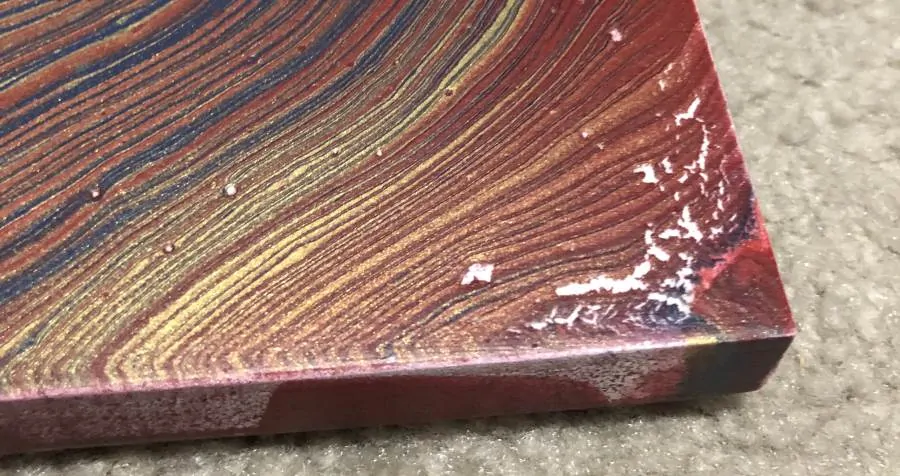
In Depth Look at the Causes of Bully
If you are reading this blog you have, well-nigh likely, already had a painting crack. I tin definitely feel your pain. Don't be also discouraged though. As I mentioned earlier it is bound to happen to all artists. Once you sympathise why cracking happens, you'll be better prepared to reduce the alter they happen once more in the time to come.
Paint Consistency
The consistency of your paint has a tremendous affect on potential cracking when the cascade paints dry out.
Paint is Too Thin
Very thin paint mixtures, especially those diluted with excess amounts of water or booze, are prone to corking because there is not enough folder in the paint, and/or paint medium, to hold everything together one time dried
Alcohol and h2o practice not contain any binders. Considering acrylic paint is water soluble, these additives also tend to suspension down the binders in the paint. Small amounts will not have enough of an effect on pigment and are valuable to control consistency. Besides much of either volition increase the potential of peachy.
With thin pigment, the top coat tends to dry out very quickly. The plastic/polymer binders, which concur dried pigment together, accumulate on top and grade the peel during the kickoff office of the drying process.
With sparse paints, in that location is less binder to hold the pigment together when dry. Having less binder reduces the stress that the semi-dried, but uncured, pinnacle pare tin can handle. The stress of the bottom coat volatiles evaporating tin cause the top to "buckle" and interruption, which is why yous see cracks. The paint beneath will then dry out and contract sideways, expanding the crack.
Paint is Besides Thick
Using acrylic pour pigment that is also thick can have a similar issue that thin paint has. Pigment that is drying is loosing it'southward water and solvents due to evaporation. H2o and solvents are what makes acrylic paint "thick" looking compare to when it is dry out.
With very thick paint, as with thin pigment, the peak layer of pain dries the fastest and forms a skin. The paint underneath takes longer to dry out. When the paint is also think, there is more contraction happening as the water and solvents evaporate and move out of the paint. This causes stress.
Acrylics were made to handle some stress, which is why they are considered more than durable and flexible than other types of paints. Notwithstanding, when a very thick glaze of paint dries and the volume of paint begins to shrink due to evaporation, that stress level can exceed what the dried top glaze tin can handle and crusade cracks to class.
Paint of whatever consistency, applied in a very thick layer, volition also increase the likelihood of cracks forming during the drying process. Coats of too-thick paint are more common in the center of a stretched canvas painting surface where the canvas sags in the center due the the weight of the pigment.
Depression Quality White pigment
Many low quality white paints are fabricated with a chalky materials that are notorious for cracking. I recommend never using craft paint in any shade of white (off white, tan, eggshell, etc.). Paints from Craftsmart, Apple tree Barrel, DecoArt, etc. are all considered craft paints.
Environmental Variables
How fast the paint dries tin have a significant touch on on cracks forming. As was mentioned previously, the meridian layer of pigment drying likewise rapidly in relation to the drying speed of the bottom layer is a surefire mode to increment the potential of cracks.
When a painting dries in a location that is besides hot, the layers volition tend to dry and dissimilar rates. Similarly, if in that location is not enough humidity in the air, the drying process for the summit and bottom layers will happen at much dissimilar rates.
Because acrylic paints are made of water and water based solvents, freezing temperatures will most likely cause cracking and other undesirable affects.
The amount of air that circulates when your painting is drying can as well increase the drying time of the top layer, while having less influence on the lesser layer'south drying time. Again, this difference in drying times between layers of paint increases the chance of cracking.
You lot tin read more than about the drying process of acrylic pour paintings hither.
Prevent Groovy In Your Painting
At present that you understand what tin can cause bang-up in your acrylic pours, how can we prevent it from happening? Try some of the steps below:
- Ensure your paint mixture has enough folder. Try thinning your paint with a medium with binders similar Floetrol, PVA mucilage, or professional mediums, in addition to water.
- Make sure your paint is not to thick and not besides thin.
- Add together a retarder to wearisome the drying process.
- Adjust environmental variables detailed here under the Slowing Downward Dry Times heading hither.
- Use college quality acrylic paints.
- Pour off more than paint to keep from having too thick of a coat on your painting surface.
- Try layering multiple sparse coats instead of doing one big thick coat if possible.
Fix Cracking In Your Painting
Now that y'all have a cracks in a painting yous want to endeavor and salvage, what are your options?
Fill with Paint
The easiest and most practical option to fix that cracking in your pour painting is to fill the cracks in with paint.
If you lot've saved pigment from the original cascade that is idea as information technology will match your pour perfectly. Utilise a pocket-sized paintbrush, a spoon, a kid's plastic medication syringe, or a zip log back with a minor corner cut out to insert paint directly into the crack. Be certain to add slightly more than than the crack will take as information technology will shrink as it dries.
Another option, which I highly recommend trying at least one time, is using a single color of paint. This can be i from the original painting or a new color, like a metal or pearlescent. This can add some additional graphic symbol to your painting and really get in popular out to the painting's audience.
Exit it Be
Another viable selection with a cascade painting with cracks information technology is exit it exist. Many famous paintings have cracks. Fourth dimension, the elements, or only moving the piece can create cracks. Many people that appreciate art, also appreciate the imperfection of the work.
Sometimes as an artist nosotros want everything to be uniform and perfect. That isn't always the best route to have. Become the opinion of those around yous. This will assist you disconnect yourself from what yous "recall" the painting should be and let you think more than considerately most the dazzler of what yous actually accept.
Scrap and Re-Pour
Another option you have is to just surrender on the piece birthday. There is nothing wrong with this choice. This is art people. There is no right or wrong respond.
1 of the best parts nigh acrylic pour painting is that once a painting is stale and cured, yous have the option to pour over the top of the piece to create something new. That manner y'all get to savour the painting process TWICE for the same painting!
Related Questions
Why is craze cracking? When paint crazes, micro-cracks form and then are "healed", or filled in, every bit the volatiles in paint mixture escape through these micro-cracks. Similar to a scar on skin, these crazes expect slightly different than skin around them and will reflect light making them more noticeable.
What causes pigment to craze? Crazing can exist acquired imperfections in the acrylic paint or pigment medium, environmental variables, paint consistency, painting surface preparation, and many other factors. Crazes form during the drying process. Read more about the acrylic pour drying processes here.
Source: https://leftbrainedartist.com/why-is-my-acrylic-pour-cracking/
0 Response to "I Dont Have an Art Studio Where Is the Best Place to Varnish Paintings in My House"
Post a Comment